Introduction
This research paper undertakes a comparative analysis of radical and liberal feminist schools of thought and their perceptions towards the commodification of sex, with a focus on OnlyFans. The author begins by exploring the laws and jurisprudence regarding obscenity and finally, suggests the legalization of content creation on OnlyFans in India for better exercise of a woman’s agency. Through the paper, the author rejects the conceptualization of “indecency” and “obscenity” through a patriarchal lens and calls for better implementation of security measures on the platform to ensure that women are safe.
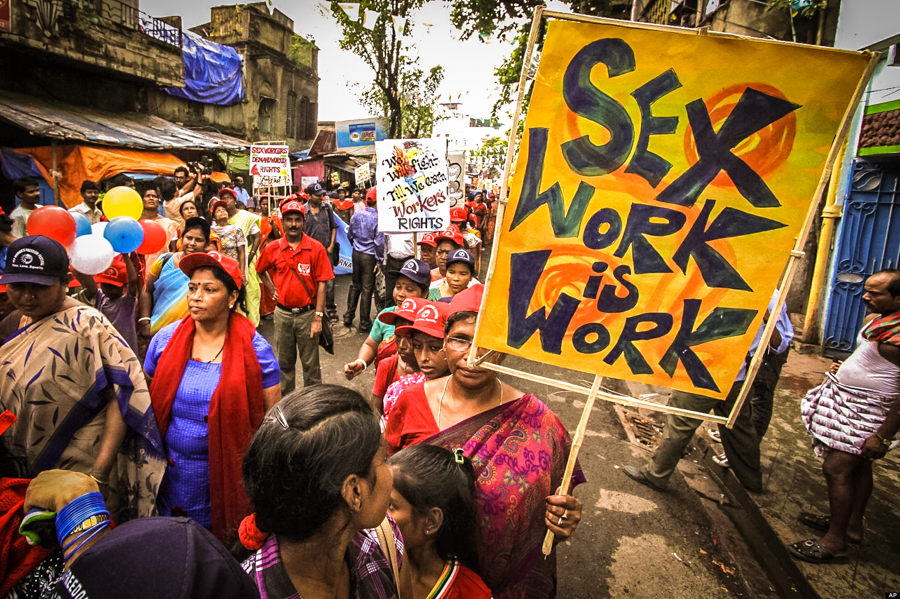
The author analyses OnlyFans because of its feasibility as an online platform and its popularity. OnlyFans is an online-based medium which is targeted towards people with a following, like celebrities and influencers [called the creator], who can sell their sexual content with their fans, or the people who pay. OnlyFans differs from traditional sex-work as the former is based on a subscription-based model (where the creator setting their subscription fee), with the platform taking a small profit from the creator. Also, OnlyFans is based entirely online, hence providing creators with the option to block and/ or report any fans who violate their consent. With the advent of technology, legalizing OnlyFans in India can actualize online sex work in a more safe and respectable manner; while also tackling issues faced by traditional sex workers.
Current Legal Framework as a Colonial Overshadow
Section 67 of the IT Act, 2000 prohibits electronic publication and dissemination of any obscene material in any online medium. “Obscene material” is any content that is sexual or appeals to the prurient interest, or tends to corrupt and deprave the viewers, readers and listeners. This is complemented by Section 292 of the Indian Penal Code, and Section 293, which prescribes special punishment for selling or distributing any such obscene objects to persons under the age of 20. It comes with three years’ imprisonment, and a fine of up to INR 2000. This is also translated into Sections 292–294 of the BNS. Foreign and Indian jurisprudence has also provided some contextualization on what constitutes ‘obscene’ content. For instance, in Regina v. Hicklin, a man, who was selling an anti-Catholic pamphlet, was ordered to destroy it since it was obscene. Benjamin Hicklin – the person in-charge of such orders – revoked the order by stating that the man’s purpose was not to corrupt public morality, but expose issues with the church, therefore showing the man’s innocence. However, when appealed, Cockburn J. held that the intention of the man was immaterial if the content was, in fact, obscene. Then, in Aveek Sarkar v. State of West Bengal, a picture of a naked man and woman (where the man’s palms were covering the women’s breasts) was published in Anandabazar Patrika. It was accompanied with an interview on their life, the significance of love over hatred and protest against the practice of Apertheid. A lawyer, Aveek Sarkar, filed a case under Section 292 of the IPC and alleged that the picture will deprave and corrupt young minds. He also argued that the picture was an indecent representation of a woman, contrary to Section 4 of the Indecent Representation of Women (Prohibition) Act, 1986. The Supreme Court, in this case, held that the aspect of obscenity must be viewed with the lens of the appearance of the photograph and the message that it is trying to convey. The Court also held that in such cases, we must reject the Hicklin test, and the correct test is the Community Standards test. Consequently, the Ranjit Udeshi case drew a parallel framework to the Hicklin test and concluded that sex in itself was not obscene, and the material needs to be viewed as a whole. It also gave the ‘public good’ exception.
If a man commits rape on a woman whom he was ‘aroused by’, the definition of obscene material, then, justifies his act as a natural reaction to her photograph. Equating one’s expression as a cause for rape does more harm than good since it takes away the focus from the perverted perception of women; and instead, glorifies the notion that men are innocent beings who get sucked into their uncontrollable sexual desire because of women’s actions.
The laws around morality and decency, as framed in the IPC, have been greatly influenced by British ideas of morality. As given in Christian philosophy, sex is sinful and inherently dirty and is only permissible within one’s marriage and procreation only. Before the British era, Indian culture was supportive of free expression of one’s sexuality in the form of erotic art. This includes the Vedas, Ramayana and Mahabharata (where sex was seen a private affair). It was also evident in art in places such as Ajanta and scriptures such as the Upanishads (Kama Sutra).
Therefore, the author calls for law-makers to acknowledge the patriarchal understanding of morality derived from colonial principles; and subsequently reject it. The irony lies in how many defend the criminalization of OnlyFans because of how it goes against Indian culture. In contrast, in fact, erotic art was given its due respect in our culture and lost its significance in a colonial overshadow.
Feminist Schools of thought on Agency
Liberal feminists believe that if a woman chooses to become a sex worker, it is not inherently sexist; and what would be sexist is the exclusion of women (as a class) from options or alternatives based on her sex or gender. Also, the liberal feminist school stresses the importance of the woman’s freedom of choice – if she chooses to sell her sexual services or content and is doing so out of free will or no duress, she should not be questioned as that invades her privacy. If one person is willing to pay and the other is willing to sell, the deal exists between them and a third party has no right to get involved or judge.
Liberal feminism does not suggest any opposition to women undertaking any form of sex work until the content in itself violates the autonomy and agency of the woman’s body and individuality. Pornography itself is not a threat to women’s autonomy and safety, but some content perpetuates and normalizes sexual and non-sexual violence against women. In that regard, liberal feminists demand stricter enforcement of hate-crime laws to prohibit violent pornography, coercion, threats and harassment.
On the other hand, radical feminists believe that sexual freedom can be achieved only by overthrowing the existing political system because the state is the harbinger of oppression, and promotes classism and capitalism. This hierarchical structure, according to radical feminists, is responsible for fantasies and violent sex. The inequality, perpetrated by gender, constitutes symbolic violence because women (mostly) comply with the man’s sexual desire without any coercion to create normative images of gendered behaviour during sex. So, there can never be any form of freedom around sexuality since patriarchy does not make it possible for women to discover their sexual desires outside the normative understanding of sex. Therefore, radical feminists believe that a woman can never truly consent because the decision is based on societal norms (dictated by the hierarchy), and not their desires or wants.
Moreover, radical feminists do not opt into the system of commodification of women’s bodies. This is coupled with an unequal market – only 1% of OnlyFans’ top creators make 33% of OnlyFans’ earnings. This counters the argument that women can gain financial independence on this platform, since the unequal market results in skewed opportunities and returns a lot less than the resources invested.
Feminist Schools of Thought on Financial Empowerment
Sexuality has evolved into a major component of the late-capitalist consumer movement. The development and growth of OnlyFans has shown that commodification of sex has been slowly normalized. The creator can make their own content and control all their content on their profile. Therefore, the platform resembles one where creators can profit from the same content that they post on other platforms (such as Instagram and Tik Tok) for free. This interaction between sex work, technology and digital platforms has produced new forms of labour.
The author believes that the demand and supply of sex has been greatly influenced by capitalism. Many scholars have also propounded that identifying, capitalizing on and using erotic capital as a source for economic gain has been viewed as a pillar of liberal feminism and a woman’s ability to commodify sex. When a woman is in-charge of how and in which ways she can exploit her own sexuality and body, it legitimizes the conversion of erotic capital into economic capital. Indian women, including sex workers, are not damsels in distress waiting to be rescued, and can lift themselves out of poverty when they have the freedom to do so.
Seeing OnlyFans as Empowering and the Need for Safety Mechanisms
Sexual agency refers to the degree of control that a person proclaims over their sexual behaviour. The development of sexual agency has shifted the narrative of women being “dumb” sexual objects to persons capable of having power over their sexual persona. This has allowed women to choose when they want to be powerful, when to be a professional or a mother and “when to be sexy for themselves or for males”. In light of how women’s sexuality and agency were controlled in a lot more oppressive manner before, the author believes that comparatively, there has been a significant shift in the paradigm.
Technology can just as easily demolish a woman’s liberty as much as it can enhance it. With the advent of technology, many feminists have argued that the digital realm has given more power to women. In a way, sex work provides more autonomy to creators on OnlyFans because they can choose whom they create content for, and the kind of content and have more agency and power to decline what the fan wants. This is operationalized by the platform allowing creators to block and report any violative behaviour. In theory, it also allows them to choose what acts they wish to perform.
However, there have been many reported cases of harassment on OnlyFans. These are of two kinds – one where someone’s content is posted without their consent and another where the creators are intimidated, bullied, blackmailed or violated on or via the platform. In a 2016 study, it was concluded that 47% of creators on OnlyFans in UK have faced some form of harassment or other crimes. A Reuters investigation also revealed that about 120 people have approached U.S. police agencies, claiming that their content was posted without their consent. Another BBC investigation showed that the platform does not automatically ban violators; instead, they are given multiple warnings. Banning OnlyFans is not going to curb this as both of these issues are a direct result of rampant rape culture and willful ignorance of a person’s consent. There needs to be stricter vigilance mechanisms to ensure that creators and persons whose content has been posted non-consensually can easily report these crimes; rest assured having victim-friendly investigations and procedures; practices such as black-listing the offenders and warning creators; and taking more measures to decrease the veil of anonymity on OnlyFans. Also, with India’s intermediary liability laws applying to OnlyFans, the platform will have a greater incentive to remove harmful content.
Keeping in mind the increase in agency that OnlyFans provides, there must be a stricter implementation of rape laws to ensure that creators are not coerced into breaching their boundaries, and can exercise their agency freely.
The freedom of Indian sex workers needs to be rescued; not only from those who violate their consent, but from the would-be saviors who violate their agency. Decency is perceived in gaze, and not in a woman’s act.
This blog is written by Anjana Palamand, a student at Symbiosis Law School, Pune, is a dedicated advocate for fostering ethical values, dialogue, and actionable change. Recognized for her impactful work, she has led initiatives reaching over 1,000 children and students across 30+ schools, colleges, orphanages, and residential apartments in the past three years. As the founder of the non-profit organization ‘Maya,’ Anjana continues to champion meaningful social change and empower young minds.
Linkedin: <https://www.linkedin.com/in/anjanapalamand>
Hi, this is a comment.
To get started with moderating, editing, and deleting comments, please visit the Comments screen in the dashboard.
Commenter avatars come from Gravatar.